

What Is a Mash Bill? 4-Grain & Other Combinations
By Gregg Snyder, Master Distiller
What Is a 4-Grain Mash Bill? A Cheat Sheet
TL;DR
A mash bill is the exact grain recipe used to make whiskey, expressed as percentages before fermentation begins. A 4-grain mash bill keeps bourbon legally intact while using four grains, typically corn plus three supporting grains, to balance sweetness, spice, texture, and structure.
What a Mash Bill Is, Precisely
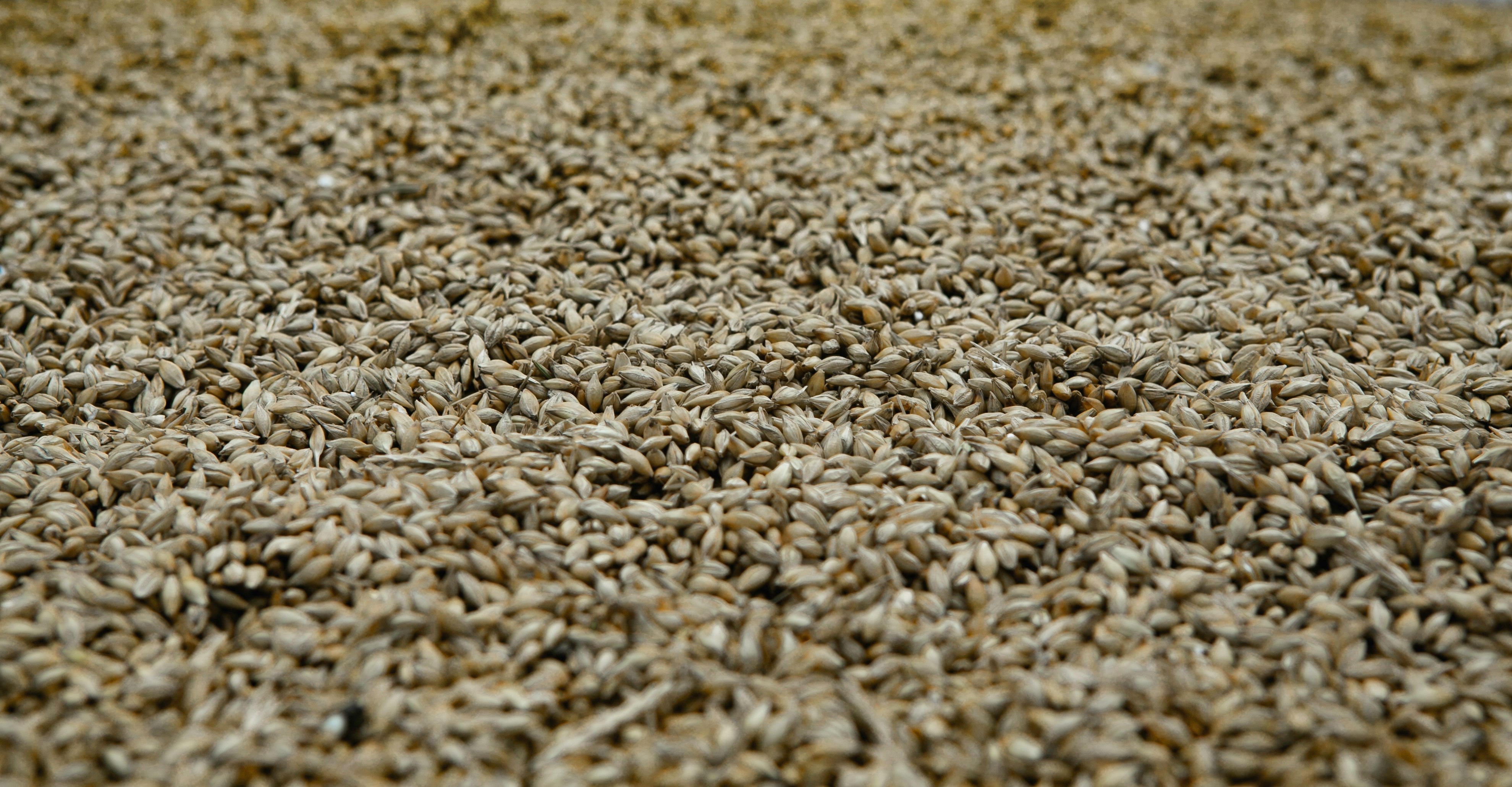
A mash bill is the exact percentage breakdown of grains used to make a whiskey, defined before fermentation begins and fixed throughout production.
That definition is technical, exact, and non-negotiable.
In American whiskey production, the mash bill determines four foundational things:
-
What the spirit can legally be called
-
What sugars are available for fermentation
-
How yeast behaves during fermentation
-
What structural flavors exist before aging begins
Once grains are milled and mixed with water, they are cooked to convert starches into fermentable sugars. That cooked mixture is called the mash. The grain recipe that created it is the mash bill.
Everything that follows, fermentation, distillation, aging, blending, builds on this decision. Nothing overrides it.
At Four Branches, mash bill transparency matters because structure matters. The bourbon behind bottles like the Founder’s Blend is designed intentionally, not retroactively. The mash bill is where that intention begins.
If you want to explore the broader portfolio, the full lineup lives in Our Spirits. If you want to understand why those spirits taste the way they do, the mash bill is the first place to look.
Why the Mash Bill Matters More Than Aging Alone
Barrels get all the credit. They should not.
Barrel aging shapes whiskey. It does not invent it.
Architecture Before Interior Design
The mash bill determines:
-
How much sweetness exists before oak influence
-
Whether spice, grain sharpness, or softness leads
-
How the spirit behaves under long aging
-
Which flavors oak can amplify versus bury
Think of the mash bill as architecture. Barrels are interior design. You can swap furniture. You cannot move load-bearing walls without consequences.
A well-designed mash bill allows a distiller to age whiskey confidently instead of hoping wood will correct structural flaws.
That structure keeps working long after the barrel. A mash bill shapes how bourbon reacts to air, water, ice, and time in the glass. It determines whether the whiskey collapses under dilution or stays coherent when it is stirred, shaken, or built into a proper bourbon cocktail. Grain balance decides if sweetness thins out, if spice turns brittle, or if everything stays stitched together the way it was designed to.
Professionals know this. Casual drinkers feel it without naming it.
Legal Context: What the Law Requires
This section is not interpretive. It is statutory.
Under U.S. federal law, bourbon must meet specific criteria laid out in the Code of Federal Regulations.
According to 27 CFR §5.143, bourbon must:
-
Be produced in the United States
-
Be made from a mash bill containing at least 51 percent corn
-
Be distilled to no more than 160 proof
-
Be entered into new, charred oak containers at no more than 125 proof
-
Be bottled at a minimum of 80 proof
-
Contain no additives
What the Law Does Not Restrict
The law does not limit:
-
The number of grains used
-
The percentage of rye, wheat, malted barley, or other grains beyond corn’s minimum
-
The use of rye, wheat, and other grain varieties together
As long as corn remains at or above 51 percent, the whiskey can legally be bourbon.
This is why 4-grain mash bills exist. They are fully compliant with federal law.
The Traditional Bourbon Mash Bill Structure
Most bourbons are built on three grains:
-
Corn
-
Rye or wheat
-
Malted barley
This structure has worked for generations because each grain serves a clear function.
Corn: The Structural Anchor
Corn provides fermentable sugars, fermentation stability, and foundational sweetness. It is legally required and functionally dominant.
Corn does not taste like caramel or vanilla on its own. Those flavors emerge when corn-derived sugars interact with new, charred oak during aging. This distinction matters.
Corn quality also matters. Poor corn ferments differently than well-sourced corn. Distillers know the difference even when consumers do not.
Rye: Precision and Edge
Rye contributes spice, dryness, and definition. It sharpens the profile and tightens the finish.
High-rye bourbons often feel angular and assertive. In moderation, rye adds clarity without aggression.
Wheat: Softness Without Sweetness
Wheat does not make bourbon sweeter. It makes it softer.
Wheat reduces perceived sharpness and allows other flavors to linger without friction. Its contribution is as much textural as it is aromatic.
Malted Barley: The Quiet Enabler
Malted barley supplies the enzymes needed to convert starches into fermentable sugars. Without it, fermentation efficiency drops.
Flavor contributions exist but remain subtle. Malted barley supports complexity without demanding attention.
What Makes a Mash Bill 4-Grain
A 4-grain mash bill is a bourbon recipe that uses four distinct grains in the mash, while still meeting the legal requirement of at least 51 percent corn.
While the most common configuration combines corn, rye, wheat, and malted barley, distillers are not restricted to these specific grains. Other varieties (such as oats) are permissible as the fourth grain, though less common.
Corn remains the majority grain. That does not change.
The difference is that a fourth grain is introduced to the mash bill, rather than sticking to the traditional three-grain structure.
4-Grain vs Traditional Bourbon Mash Bills
| Attribute | Traditional Bourbon Mash Bill | 4-Grain Mash Bill |
| Number of grains | Three | Four |
| Secondary grain | Rye or wheat | Rye and wheat, sometimes additional grains |
| Flavor approach | Emphasizes one direction | Balances multiple directions |
| Texture control | Limited | Expanded |
| Legal classification | Bourbon | Bourbon |
This is not innovation for its own sake. It is expanded control.
Why Distillers Choose a 4-Grain Mash Bill
This decision is very intentional.
Distillers choose 4-grain mash bills to gain control over balance, texture, and consistency without relying on heavy aging or aggressive barrel strategies.
Balance Over Extremes
Using both rye and wheat allows a distiller to moderate each grain’s tendencies.
Spice remains present without dominating. Softness exists without dulling the profile. Corn sweetness stays central instead of bloated.
Consistency and Control
Four grains introduce more variables. They also allow finer adjustment.
That matters for consistency across batches and releases, especially when a whiskey is intended to be dependable rather than surprising.
Why 4-Grain Mash Bills Are Less Common
They are harder to manage.
Sourcing becomes more complex. Fermentation requires closer monitoring. Small changes in grain quality have larger downstream effects.
Many distillers choose simplicity for good reason. Those who choose four grains usually do so deliberately.
Separating Fact From Flavor Language
This is where precision matters.
A mash bill does not guarantee flavor. It enables it.
What Mash Bills Can Determine
-
Sugar availability
-
Fermentation behavior
-
Structural balance
-
Aging potential
What Mash Bills Cannot Promise
-
Specific tasting notes
-
Perceived quality
-
Personal preference
Corn trends sweet. Rye trends spicy. Wheat trends soft. Malted barley trends cereal-driven.
These are tendencies, not contracts.
Correcting a Common Misconception
A 4-grain mash bill does not automatically mean more complexity. It means more flexibility. What happens next depends on execution.
Fermentation, Distillation, and Aging Implications
The mash bill determines what yeast has to work with. Different grain compositions affect nutrient density, sugar structure, and fermentation speed.
Fermentation and the Mash Bill Relationship
Balanced mash bills often ferment more predictably. Predictability is not boring. It is professional.
Distillation Proof and Grain Expression
Lower distillation proof preserves more grain character. Higher proof strips it away.
Mash bills designed for nuance pair better with conservative distillation cuts.
Barrel Aging Does Not Override the Mash Bill
Oak influences whiskey heavily. It does not erase grain choice.
Even after years in new, charred oak, the structural contributions of corn, rye, wheat, and malted barley remain identifiable.
Where Barrel Influence Can Overshadow Grain
It is critical to distinguish between initial aging and secondary finishing.
While initial aging in new, charred oak is fundamental to the spirit's identity, heavy secondary finishing or extended aging can significantly alter the profile. When executed well, these techniques enhance specific flavors in the bourbon; however, if the treatment is too aggressive, it risks muting the unique expression of the original mash bill.
How Four Branches Approaches Mash Bills
Four Branches exists to honor service, discipline, and intention. That philosophy extends to production choices.
Mash bill decisions are made to support balance, consistency, and longevity rather than novelty.
You can learn more about the people behind those decisions on Our Founders and the broader mission on Our Story.
Special releases like the 250th Anniversary Continental Army Navy Marines and mission-driven bottles like Folds of Honor reflect the same production discipline.
Purpose does not replace process. It complements it.
The cause matters. The liquid still has to earn it.
Why This All Matters
A mash bill is not trivia.
It is the first irreversible decision in whiskey production.
Four grains do not make bourbon better. They make it different.
If the goal is balance, consistency, and depth without theatrics, a 4-grain mash bill earns its place. Understanding that structure helps you choose intentionally, taste more clearly, and appreciate what the distiller actually controlled.
If you still want a broader terminology reset, this breakdown of bourbon vs whiskey offers a clean starting point.
You do not need to memorize percentages.
You just need to know where to look.
And now you do.